


Address for the 58th President
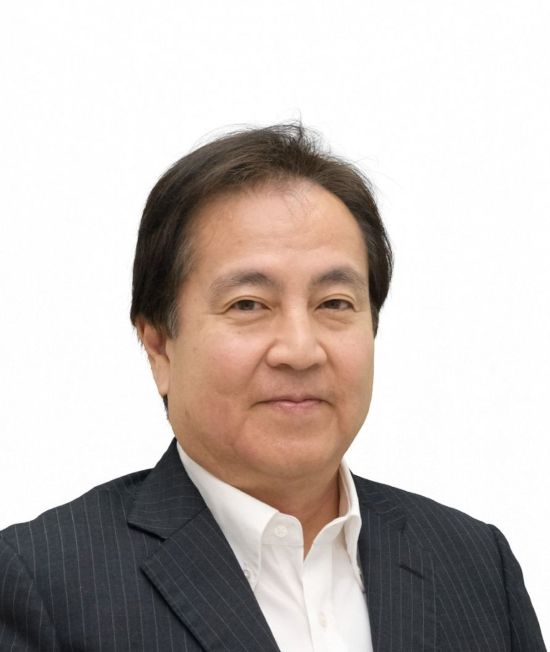 I am Kimiya Komurasaki from the University of Tokyo, and I have been appointed as the 58th president. I would like to take this opportunity to say a few words of greeting and share my thoughts on the direction of the Society.
Our society has a proud 92-year history dating back to the founding of its predecessor, the Japan Society of Aeronautical Engineers. Aerospace has long been cutting-edge technology and a pioneering academic field. Today, various air transportation and satellite services have developed as social infrastructure technologies, and new technologies are creating new businesses, which in turn are requiring newer technological developments. Our society’s articles of incorporation state that it aims to “provide a forum for the exchange of information on theoretical and applied research in aerospace, promote its development and dissemination, and thereby contribute to the advancement of academia.” To these objectives, we have contributed to the development of the aerospace field through a variety of activities such as organizing academic conferences, technical committee activities, and journal publications.
In recent years, the aerospace industry has become one of the manufacturing industries with particularly high added value and has great potential for job creation across many industries, including advanced materials, precision machining, and electronic control. In addition, with the rapid expansion of markets for satellite communications, Earth observation, space transportation, expectations are rising for it to become a driving force for Japan’s economic growth. In this socio-economic situation, more than half of the Society’s current 3,500 full members are affiliated with companies, making it an organization that fully fosters industry-academia collaboration. Then, our Society is expected to contribute to the “social implementation” of cutting-edge aerospace technologies and the “development of human resources” that will support the growth of the aerospace industry.
First, regarding “social implementation,” I believe our Society can play a significant role. While our primary responsibility is to continue providing cutting-edge technologies and ideas, in recent years, our conferences have not only provided academic and technical discussions but also deal with legal systems and funding, and engage in various initiatives, such as inviting government officials to panel discussions. Furthermore, to accelerate the social implementation of new technologies, it is essential to collaborate with the government to envision Japan’s future. Over the past few years, JSASS Board of Directors has been working to build bridges between the Society and the government. We aim not only to propose a future vision from the Society’s perspective to the government, but also to facilitate close and swift collaboration. The Interdisciplinary Collaboration and Development Division Committee will serve as a liaison between the Cabinet Office and other relevant ministries and agencies and each of our Society’s technical committees, which are composed of academic experts in various fields, and will build a mutually beneficial system, including providing ongoing information to the government. Although each committee’s activities are carried out through the volunteer efforts of our members, we appreciate the committee members’ active cooperation in achieving our shared goal of creating a future society and accelerating social implementation.
Another important role of the Society is “human resource development.” In addition to the chronic labor shortage caused by the rapid decline in the birthrate and the mass retirement of skilled engineers, competition for talent with other industries, including AI experts, is making the situation even more serious. In the air transportation field, there are concerns that the shortage of pilots and aircraft maintenance technicians will reach a critical point within the next 10 years. In addition to technical and institutional approaches such as streamlining education and qualifications and reducing maintenance work, we believe that one of Society’s major missions is to guide young people with a passion for the sky and space into the aerospace industry.
Our society already has approximately 1,500 student members and has been working to develop young talent through student awards from universities and colleges of technology which have aerospace departments or courses, awards for outstanding presentations at conferences and symposiums, the All-Japan Student Indoor Flying Robot Contest, and the junior membership system launched in 2022. However, “human resource development” remains a secondary role of society, and a solid institutional and financial framework has yet to be established. First, we would like to explicitly state “human resource development” as a new purpose in our articles of incorporation and invite not only junior members but also schoolteachers, whose primary responsibility is education, to participate in our activities so that we can work together to develop talent. Furthermore, we would like to establish a financial structure that will enable society to cover the costs of networking among junior and student members, contest activities, subsidies for participation in domestic and international conferences, and prize draws.
We are also facing a variety of challenges, including stabilizing secretariat management, strengthening financial structure, streamlining operations for organizing conferences, publishing/disseminating information, awards for people and technologies, revitalizing member interaction, and collaborating with other organizations. Together with the current board members, we will take the lead in addressing these challenges, but we cannot achieve these without the understanding and cooperation of all the society members. We appreciate your continued support and cooperation.